How To Be The Greatest In The World
What bassist Jaco Pastorius taught me about mastery
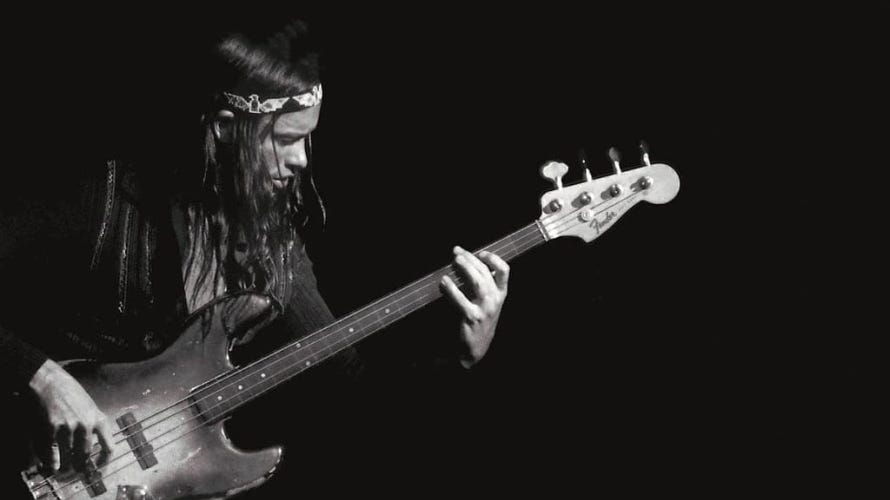
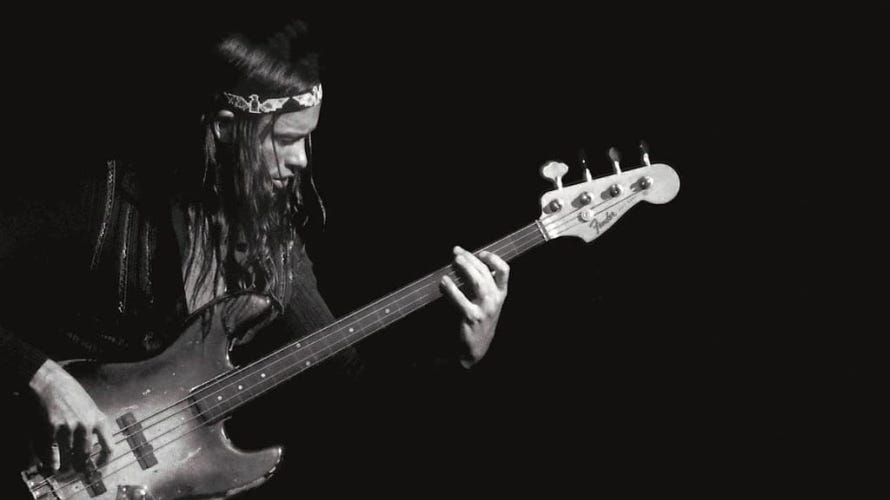
Even before he was famous, Jaco Pastorius would introduce himself by saying, “Hi, My name is John Francis Pastorius III, and I’m the greatest electric bass player in the world”. Rolling eyes would quickly be replaced by slacked jaws when he started to play… because it only took a matter of seconds to realize that he really was the greatest bass player in the world. But what often gets overlooked is Jaco was not destined to be the greatest. He achieved that feat through an unwavering commitment to improving at his instrument, and a fearlessness with how he played it.
You Can’t Master Five Instruments At Once
Music was in Jaco’s blood, he had a natural proclivity towards any instrument he laid his hands on. Early on, he realized that if he wanted to do something really well, if he wanted to become the greatest, he couldn’t do that by playing five instruments at the same time, he’d have to settle for just one. People think settling means giving up, and they’re right. If you want to be great, you need to focus, and that doesn’t just mean choosing one thing, it means giving up everything else.
If you’re going to choose one thing to dedicate your life to, pick something you’re already good at. Becoming the greatest at what you do is almost impossible, and it becomes infinitely less likely if you’re not naturally good at it. You won’t become the best by trying to run up a hill that others can run down. Hard work beats talent when talent doesn’t work hard… but when talent does work hard, it’s no contest. Jaco didn’t become the greatest bassist in the world because he had natural skill or a strong work ethic, it was because he had both.
“Besides playing the demanding five-hour shows every night [with Wayne Cochran and C.C. Riders early in his career, Jaco] practiced on the bus as the band traveled from town to town. “He had that bass in his hands constantly,” recalls [Larry] Brent. “And he had this little practice amp with headphones, so he could sit there and work out new ideas without disturbing anybody.” – Bill Milkowski, Biographer, 1995
No matter how good you are, mastery isn’t pretty to pursue. It’s easy to romanticize, but countless hours spent practicing when no one is watching is unglamorous work. To practice well, you have to pick something you can’t do, and do it over and over and over again, failing each time, until you can do it without thinking. A skill is not yours until it is second nature.
“Anything from one to four hours a day. I put in some real strong time. But I concentrated in such a way where other people would probably have to put in 20 hours to every one of mine. When I concentrate nothing else even exists. You get so involved and then it’s like a motor skill, it’s completely bam! in your hand and there’s no way of really losing it.” – Jaco Pastorius, Bassist, 1978
Most of your improvement will be made in the hours where it feels like none is happening. We tend to associate progress only once a new skill has been acquired, but progress is defined as “movement to an improved or more developed state”, not reaching an improved or developed state. As long as you are putting in the intentional work to get better, you are making progress.
The hard part is that progress compounds inversely, the better you get, the harder it becomes to get even better than that. If mastery is on a scale from 1-10, and practice is how you advance from one level to the next, each time you move up a level, it is going to take just as much effort to reach the next one as it did to surpass all of the levels that came before it. To go from level 4 to 5 is going to take as much effort as it took you to go from 0 to 4. Each time you reach the top of a mountain, you are rewarded with an even bigger mountain. Half the battle of mastery is not getting discouraged when looking up at the next peak.
“As with all significant learning, this learning was measured not in a straight line but in stages: brief spurts of progress separated by periods during which you seemed to be getting nowhere… How do you best move toward mastery? To put it simply, you practice diligently, but you practice primarily for the sake of the practice itself. Rather than being frustrated while on the plateau, you learn to appreciate and enjoy it just as much as you do the upward surges.” – George Leonard, Writer, 1991
Practice is necessary in order to achieve mastery, but you’ll never achieve mastery if you only practice. You can develop a technical skill through repetition, but you cannot mimic a real-life situation. There’s certain skills and knowledge you acquire only by actually doing the thing.
Early in his career Jaco would spend hours working on his craft in between daily, five-hour shows. He was developing as an artist during the day, and seeing if what he was learning would hold up on stage at night. Reality has its own ideas of what works, and it rarely matches up with yours. The true test comes when you put your practice into practice. Putting your work into the world, and seeing how the world reacts is the only way to know if you really are the greatest.
“Q: What else did you study and how does this all come together under the heading of musicianship?
A: Work. You’re just staying out there…applying it.” – Jaco Pastorius, Bassist, 1985
There’s So Much More Involved Than Just Playing the Notes
You’ll never become the greatest if you have nothing to say. In addition to technical mastery, an artist needs emotional mastery — the ability to convey how they truly feel to an audience in a way that they can understand. While these two things may feel diametrically opposed (technical skills are precise, emotions are messy) they are actually complementary. In order for you to take an abstract feeling and turn it into something people can identify with, you need to have the skillset to be able to do so.
That skillset is a waste if you’re not using it to show the world who you truly are. As an artist, people do not connect with your skill, they connect with your soul. Perfection is uninteresting. It is your idiosyncrasies and peculiarities that set you apart and make you interesting. No one is going to pay attention to you if you get rid of the things worth paying attention to. Your uniqueness is what sets you apart from everyone else.
Do not confuse uniqueness with originality. You’re not going to be “first”, you are next in a lineage of great artists who came before you. But none of those artists were you. They did not grow up at the same time, they did not grow up in the same place, and they did not go through what you have gone through. You are the sum total of everything you’ve experienced in this life, and that is what makes you unique. The goal is not to be original, the goal is to be personal. Your art should be a reflection of your heart; who you are, what you’ve gone through, and how you feel.
One of the most famous songs Jaco ever wrote is called Portrait of Tracy. While it was shared with the world, it was written for his first wife. No one who listens to that song knows what it feels like to be married to Tracy, but any listener can relate to what it feels like to be in love. The audience may have never experienced exactly what you’ve gone through, but they will have experienced similar emotions, and that is what they connect with.
“There’s so much more involved than just playing the notes. I mean, a chimpanzee could learn to do what I do physically. But it goes way beyond that. When you play, you play life.” – Jaco Pastorius, Bassist, 1977
Your heart is meant to be inside your body, but as an artist you must make the decision to rip it out of your chest and put it into the world. It’s much easier to focus on the technical aspects of your work. Skills are binary, either you can do them, or you can’t. Emotions on the other hand, are ambiguous; you yourself don’t always know how you truly feel. The creative process, if you let it, is the act of using craft to process what you think and feel. But if you’re only focused on the technical work, you can avoid the emotional work. Open yourself up to the muse and be unafraid of what might come out.
If you don’t push yourself out of your comfort zone, you’ll never push the audience outside of theirs. Great art moves the culture forward by exposing people to thoughts and ideas they never would have experienced on their own. Those thoughts and ideas are derived from the experience and worldview of the artist. It is much easier and safer to give the audience what it already knows, but that is not the path to take if you want to be great. You become the greatest in the world by changing the world and you’ll never do that if you play it safe. To play life, you have to play fearless.
“I think of Jaco a lot today, especially in my teaching of music. I come across students who play well and have good taste, who have good time and know the language-but somehow it’s not flying. I have a body of study devoted to students who fall into that category, and I have a name for this syndrome: I call it “id lock.” A lot of the problem is that the emotional center, the id, is locked for these people. They know music but they’re not screaming it from their heart, as Jaco did. He did not suffer from id lock at all. His id was wide open. He was fearless. And fear is really the biggest enemy of creativity.” – Ra Kalam Bob Moses, Drummer, 1991
To Be Like The Greats, You Must Study the Greats
To become one of the greats today, you must go further than the greats who came before you. In order to do that, you’ll need to know how far they made it. You do not want to retrace their footsteps, you want to pick up where they left off and keep moving forward. Knowledge of the past is necessary to chart your path for the future.
Jaco became the greatest because he pushed the bass guitar further than anyone before him. He was able to do things with the instrument that no one had ever done because he knew what other bassists had tried. In art, innovation is less about doing what has never been done, and more about not repeating what has come before. Without his knowledge of history, Jaco wouldn’t have known what was a unique creation, and what was a recreation. Your art is a product of its time, but also of its predecessors.
“Do not seek to follow in the footsteps of the wise. Seek what they sought.” ― Matsuo Basho, Poet, 1600s
Jaco did not limit himself to studying the history of the bass. Your most innovative ideas tend to come from outside your area of focus. If you asked Jaco who his greatest influences were, he would cite anyone but a bass player. He would tell you about the trumpeters, composers, and singers that he admired. This breadth of influence was one of Jaco’s greatest strengths because it gave him inspiration from places no other bassist was pulling from.
The opening song on his groundbreaking, debut album from 1976 is a perfect example of this. Donna Lee is a fast moving, yet precise piece, making it extremely challenging for anyone to play. For that reason, it has become a standard, a way for any bassist to prove their proficiency with the instrument… despite the fact it’s not a bass song. Jaco’s rendition of Donna Lee is actually a cover of a Charlie Parker and Miles Davis tune recorded in 1947, written for, and performed on saxophone and trumpet. But when Jaco covered it, no one had ever heard anything like it on the bass – he completely redefined what people thought was possible with the instrument. He would not have been able to do this if he hadn’t been a student of the past. It was his knowledge of what came before that allowed him to innovate and give people something they had never heard.
The dangerous thing with the past is it’s easy to fall in love with. You can spend your whole life paying tribute to the work that inspired you, instead of doing the work that will inspire others. While the past is filled with lots of great work, you can’t spend all your time looking back if you want the future to be filled with great work too. Once you’ve studied the past, let it go. You’ll never become one of the greats if all you ever do is try to be like them.
“I ain’t hanging on to the past. I ain’t putting people down that do that, don’t get me wrong, because lots of people aren’t capable of doing anything else but hold on to the past.” – Jaco Pastorius, Bassist, 1978
It’s the Three Stars You Gotta Worry About
Early in his career Jaco joined the popular jazz fusion band Weather Report. The first full album they made together, Heavy Weather, went on to be the band’s most successful record, receiving five stars from the preeminent jazz publication DownBeat. It was a surprise to many that the group’s next output, Mr. Gone received only one star from the magazine, a review that had Joe Zawinul, their bandleader, fuming. Jaco on the other hand was elated, and can be recalled saying, “This is great! We’re getting headlines. Five stars or one star… it’s the three stars you gotta worry about. Because that’s mediocre, and if there’s one thing I’m not, it’s mediocre.”
The distance between five stars and one star is closer than five stars and three stars. In order to make something great you need a high degree of technical proficiency and emotional resonance inside of a novel experience. The risk is if it is novel, that means the audience has not experienced it, and that means there’s a chance they won’t like it. If they do… five stars. If they don’t… one star.
It’s much easier to be technically proficient and emotionally resonant inside of an experience that the audience is familiar with. This makes success (three stars) more likely, but greatness (five stars) less so. People become great when they expose themselves to a higher probability of failure, and still find a way to succeed. There’s nothing inherently wrong with being mediocre – you can make a living being good at what you do. But if you want to make something that changes lives, you’re going to have to be great. You’ll need to be better than what came before you, so good they can’t ignore you, and so impactful they’ll never forget you.
If you liked this, you’ll like my two part podcast on Jaco’s creative philsoohpy: Apple | Spotify | YouTube