There Are No True Stories
Why Chernobyl Lies to You
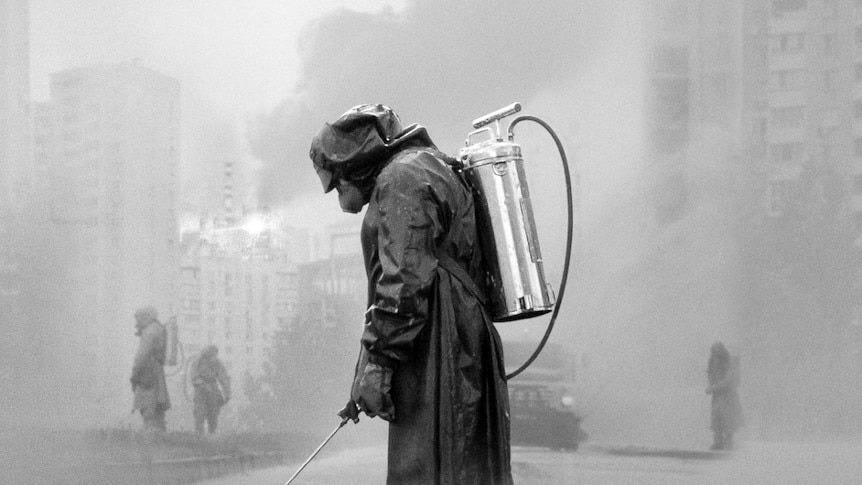
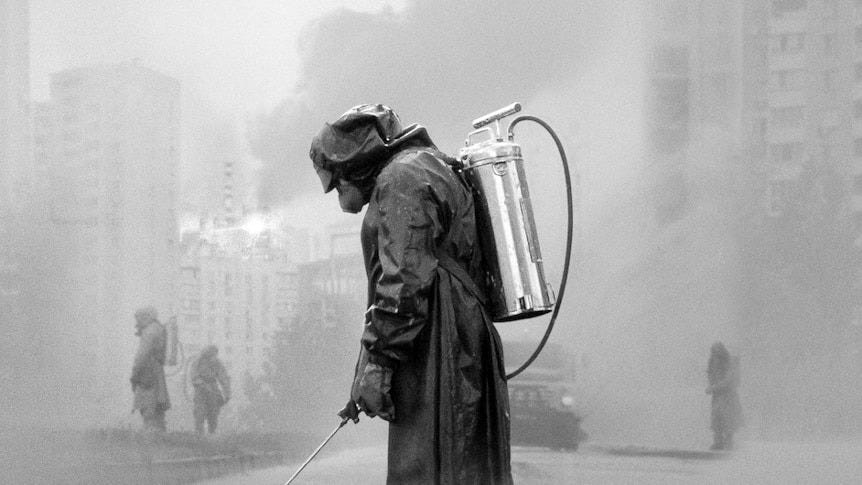
Chernobyl is one of the greatest miniseries to ever air on television. Created by Craig Mazin, the show tells the story of the 1986 nuclear power plant explosion in the Soviet Union. Before he wrote the show, Mazin spent years studying Chernobyl, reading memoirs, getting firsthand accounts, and going through official records. By the time he wrote the show he was practically an expert; he could tell you everything that happened, but despite that he still relied on fiction to tell his story.
The protagonist of the show is Professor Valery Legasov, a scientist brought in to advise the government’s response to the disaster. In the final episode, Legasov is called upon as a key witness during the trial of the men responsible for the explosion. He has to explain to the judge, and everyone watching, the truth about how the explosion happened. It’s a brilliant scene with phenomenal writing and unbelievable performances, it is Chernobyl at its best… and it never happened. The entire scene, one of the series’ finest, is a figment of its writer’s imagination.
The ironic thing about Chernobyl is that at its core, it’s about the consequences of lying, and in order to teach you that lesson, it lies to you. Craig Mazin knew what happened, but he made intentional choices to hide the truth from the audience for the sake of the story. Even though it was based on a true story, Mazin admitted he took dramatic license, like having Legatsov in the courtroom, “out of necessity”. A true story is never the truth, and it shouldn’t try to be.
What is the cost of lies? It’s not that we’ll mistake them for the truth. The real danger is that if we hear enough lies, then we no longer recognize the truth at all. What can we do then? What else is left but to abandon even the hope of truth and content ourselves instead with stories.” – Chernobyl, Episode 1, 2019
When to Lie
The world does not tell stories. Life has no plot, no one is the main character, and there is no moral. When you’re adapting a “true story”, you’re taking something that happened in real life, and turning it into a story, something with a narrative, a clearly defined protagonist, and a theme. You have to take reality and condense, omit, and reorder it so that everything fits together as one cohesive piece.
Chernobyl took place over two years, spanned two continents, and impacted millions of lives, and the show had to find a way to fit it all into five episodes. If Craig had tried to tell the story of Chernobyl and cram every little detail about it into his show, it would have ballooned into hundreds of hours, had thousands of characters, and no clear narrative. It’s impossible to tell the “whole story”, and that’s not what you’re trying to do.
Your goal as a storyteller isn’t to teach the audience about history, it’s to tell them a great story. It may feel like there is only one way to tell a “true story” because history lays out what happened, but history changes depending on whose eyes you’re looking at it through. If you’d asked ten different writers to create a series based on the events of Chernobyl, you’d end up with ten completely different shows. Just because Craig chose Valery Legasov as his protagonist does not mean he was the only option. You could have had one about Gorbachev and focused on the bureaucracy inside the Soviet Union. You could have done a series about Anatoly Dyatlov, making it a character study of the man responsible for the explosion. Another version could have been centered around a fictional liquidator (someone responsible for the cleanup) and focused on their individual experience.
The reason Mazin chose Legasov is because that is who he was most interested in. When it comes time to sit down and write the story, it is no longer about the event, it’s about you. With countless ways to tell it, and more information than could possibly fit, what is interesting to you, what you want to focus your story on, becomes the filter. If something is not relevant to the story you’re trying to tell, it shouldn’t be there. Once Craig decided that Legasov was going to be the protagonist, it gave his story direction. He focused it around what Legasov experienced, the people he interacted with, and the decisions he had to make.
Mazin’s story had all the elements of the “other shows”, but in his show they are all in relation to Legasov. We see the bureaucracy, but only when Valery is called to a meeting in the Kremlin. Dyatlov is in the series, but as a foil to our protagonist, someone who not only embraces lying, but blocks him from finding the truth. The liquidators in the show are used to show the human cost of the decisions Legasov has to make. Instead of trying to tell the “whole story” of Chernobyl, Craig only had to tell the story of one man, which allowed him to tell the story of Chernobyl.
“I had a point of view of how I wanted to do it, and that’s how I did it. I always felt the story needed to be told in a certain way… It’s not about the explosion. I want to show you what it’s really about, and I want to tell the story through the lens of people.” – Craig Mazin, Creator, Chernobyl, 2019
There are naturally going to be times in your story where you need to deviate from history. When writing Chernobyl, Craig’s rule was that they wouldn’t invent anything to make the show scarier, more sensational, or more dramatic; they would only make changes if it helped tell the story. One of the most obvious examples of this is the courtroom scene. Legasov was not present for the trial, but Mazin’s version of events would have felt incomplete had he not been.
Mazin put Legasov in the courtroom for the final episode because it is what the story called for. Not only had the audience spent four episodes developing a relationship with him, but the show is about Legasov learning the extent with which his government lies to its people and the devastation that it causes. By the end of the fourth episode, Legasov knows the truth, and if the story had ended with him doing nothing about it, not only would it have been an unsatisfying ending, but it would have been unlike the character the audience had come to know.
“Legasov was not in that courtroom. The truth is he was not there. But I can’t tell the story without him being there because nobody’s going to want to watch that. They know this guy; they want to hear from him.” – Craig Mazin, Creator, Chernobyl, 2019
Mazin only lied when the story would have been worse if he told the truth. And he didn’t just find the most convenient way to lie either, he used the truth to tell a believable one. While Legasov was not present for the trial in real life, as a top Soviet scientist who was a critical part of the country’s response to the explosion, it wasn’t much of a stretch to have him there in the show. And having him expose his government while on the stand wasn’t a big leap either, as that’s exactly what he did with the memoirs he recorded before he died. Every liberty Mazin took was connected to something real. If you’re going to lie in your story, it needs to be wrapped in truth.
When to Tell the Truth
If you’re going to write something based on a true story, you need to put in the time to research and become an expert on what really happened. The same way you have to know the rules in order to break them, you need to know the truth in order to tell a believable lie. If you can’t justify the changes you’re making with your story, you probably shouldn’t be making them. Craig spent over two years researching and preparing to write Chernobyl; it was his deep understanding of what happened that allowed him to tell his version in a way that was authentic and believable.
That believability is why Chernobyl worked so well. It’s hard to notice when Craig deviates from reality because everything else in the series is truthful. The story takes place in the Soviet Union in 1986 and the show does its best to bring you there. The way people behave, the clothes they wear, the cars they drive, the buildings they live and work in are all exactly as they were in the USSR in the 1980s. The show earns your trust by paying attention to every little detail and being as accurate as possible so that it can lie to you. If the world where your story takes place feels true, then the lies you’re being told will too.
“Part of being efficient is knowing your research. I think you can drag things out when you’re bumbling through it. But when you know it, not only do you know as much as you need to know, you also know what people need to know, which isn’t the same.” Craig Mazin, Creator, Chernobyl, 2020
Ghost of Tsushima is a video game that, similar to Chernobyl, tells a story inspired by true events. In 1274, the Mongols invaded the island of Tsushima and slaughtered every samurai who lived there. In Ghost of Tsushima, the story deviates from history in that one of the samurai survives and goes on a revenge quest to defend his home and rid the island of its invaders. Despite the fact it was a fictional story, the developers wanted Tsushima itself to be historically accurate to the 13th century, and were meticulous when it came to designing the island.
When explaining this approach, creative director Jason Connell said that this was important to them, not because they were trying to recreate the island “stone for stone”; the game was not a Tsushima Island simulator. The reason they wanted Tsushima to feel authentic to the time period was because it allowed them to transport the player “in an artistic and respectful way” into the game. Once the player has been transported and isn’t thinking about the authenticity of the world, they can lose themselves in the story. Connell went on to say that their goal was “to create a Tsushima that can be expressive, artful, entertaining, but culturally thoughtful as well.”
With Chernobyl, Craig wasn’t trying to make a Chernobyl simulator; he was telling a fictional story, albeit largely inspired by real events. While he wanted to be culturally thoughtful like the creators of Ghost of Tsushima, he also wanted his show to be expressive, artful, and entertaining for the audience. Facts alone are uninteresting, it is how they are used in your story that is. It wouldn’t have mattered how accurate Chernobyl was if it wasn’t entertaining because no one would have watched it. Before you get the facts straight, get your story straight.
“When you’re making historical drama, you do need to be aware of the audience. If I wanted to just educate people, I suppose I’d write a book — and there are some terrific books that are being written about Chernobyl — or I’d teach a class. I want to educate people but I also want them to feel something. This is about connecting to other human beings, and feeling empathy for human beings that aren’t even with us anymore. That requires drama, and that’s a different practice.” – Craig Mazin, Creator, Chernobyl, 2019
Focusing on the story first is exactly what Peter Jackson did when adapting the Parker-Hulme murder case for his 1994 film, Heavenly Creatures. There have been numerous adaptations of New Zealand’s most famous murder, but Jackson’s is considered the best. After Pauline Parker killed her mother with the help of her best friend Juliet Hulme, the ensuing trial became a media circus. This is usually what people focus on when telling their version of events, but Peter took a different approach. Instead of focusing on the most dramatic parts of what happened, Heavenly Creatures is about the friendship between the two girls and explores how it became so intense that it ended in murder. The film never even gets to the trial.
Peter was first drawn to the story for the same reasons as everyone else, but as he was researching he became fascinated with the relationship of the killers, how something that started out so harmless ended in violence. Once he and his partner Fran Walsh realized this is where they wanted to focus their story, they stopped researching altogether and went and wrote the first draft. They didn’t want to get mired down in the intricacies of the case before they’d ironed out the story. It was only after they’d completed the first draft that they resumed their investigation, reviewing legal documents, visiting the scene, and interviewing people who knew the killers. They used this additional research to add to their story and make it more believable, not to try and tell a different one.
“We wrote the first draft from the position where we felt we knew some of the facts, but there were a lot of gaps. We thought if we wrote a draft we would know where the holes were, and we would know what we had to pursue in terms of research. For instance, Fran and I had never been down to Christchurch when we wrote this first draft, and Christchurch is such an integral part of the story. Then we made the trip down there before the second draft and were able to modify a lot of things, interview a lot more people. We actually did that on purpose, because we wanted to nail the story before overlaying it with a lot of historical detail.” – Peter Jackson, Director, Heavenly Creatures, 1995
While Craig didn’t write his drafts around his research in the same way as Peter Jackson, he was constantly adding in new details throughout production. Chernobyl was shot on location in Lithuania and Ukraine, and the local crew brought something to the story that no amount of research could have; some of them had grown up in the Soviet Union when the reactor at Chernobyl exploded. Because of this, they were able to tell Craig when little details like things people said or did were not consistent with how they would have been at the time. Mazin welcomed this feedback and incorporated it into the series because he knew that making the show feel more authentic could only be an improvement.
The facts won’t turn a bad story into a good one, but they will make a good one better. It’s easy to lose sight of the story when trying to be as accurate as possible, but the audience is coming to be entertained, not to be educated. Part of entertaining them requires you to bring them into your world and keep them there the entire time. If they start questioning little details of your world, that means they’re not paying attention to your story. This is why the notes from the crew made Chernobyl better, it made the world where the story takes place feel real. The facts are there to support the narrative, use them to colour your world and make it believable so that the audience can lose themselves in the story.
Your World, Not Ours
When you’re adapting a real life event into a story you’re giving your interpretation of events, not recreating reality. All stories do this, both fiction and nonfiction, the only difference is how much they alter reality. The Lord of the Rings takes as much inspiration from our world as Chernobyl does, but how each of their creators used reality was different. The Lord of the Rings is telling an entirely new story, while Chernobyl is telling one based on something that actually happened. The Lord of the Rings features invented characters, while Chernobyl uses real people to tell its story. The Lord of the Rings takes place on a different world… but so does Chernobyl.
Tolkien always said that Middle-earth is on Earth, but not our Earth. He was a religious man, and therefore he believed that God was The Creator, which meant that human beings could not be The Creator, they were “sub-creators”. The stories he or anyone else told did not take place in our world, but in a “sub” or “secondary world”. A world where they could “rearrange the primary material in some particular form which pleases”. He wasn’t necessarily referring to a moral pleasing, but an aesthetic one. The primary material being rearranged is the reality the story is inspired by. When writing his book, Tolkien took all the things that he liked: language, myth, the middle ages, and he rearranged them into The Lord of the Rings.
“What really happens is that the story-maker proves a successful “sub-creator”. He makes a Secondary World which your mind can enter. Inside it, what he relates is “true”: it accords with the laws of that world. You therefore believe it, while you are, as it were, inside. The moment disbelief arises, the spell is broken; the magic, or rather art, has failed. You are then out in the Primary World again, looking at the little abortive Secondary World from outside… Every writer making a secondary world wishes in some measure to be a real maker, or hopes that he is drawing on reality: hopes that the peculiar quality of this secondary world (if not all the details) are derived from Reality, or are flowing into it.” – J.R.R. Tolkien, On Fairy-Stories, 1939
When he was writing Chernobyl, Mazin took everything he knew about what really happened, and rearranged it into a story that he was interested in telling. In order to do that he had to condense, omit, and reorder reality so that he could create a satisfying narrative for the audience. Once he had his narrative, he used the details from reality to colour in his show and make it authentic. Our world is where reality takes place, your story takes place in its own.
There is no such thing as a “true story” because when someone is telling you what happened, they are taking you into their world. How they interpret what happened and share that with you will be influenced by what they believe and what they want you to take away. The primary goal of a story is to entertain, but the reason we tell them is to share our worldview with others and make them believe what we believe without them realizing it. And because the world is not simple, because there is no plot, main character, or moral, you must invent your own subworld where those things do exist in order to tell your story.
Why We Lie
The reason Chernobyl’s story resonated with audiences so deeply is because it did more than entertain them. A story well told leaves the audience with something to walk away with, something they can think about long after they’ve finished watching. Any great story has a theme, an underlying message or lesson the artist wants to leave with the audience. In the case of Chernobyl, Craig wanted to use the material to explore the cost of lies. The way he structured the show wasn’t around how things unfolded chronologically, instead, he used the structure of the show to highlight how lies, over and over again, led to dire consequences for the Soviet people.
The way most people would have opened Chernobyl was with life before the explosion, introducing us to all its characters during a happy time in their lives before the disaster. Mazin decided to open the show with the explosion, which allowed him to use the fact that the audience knows what really happened to his advantage. Because none of the characters know what happened, this lets the audience see the lies being told to them from the beginning. When Dyatlov insults his team and tells them the reactor couldn’t have exploded, we know he’s lying. When the firefighters are told that they are going to put out a roof fire, we know they are being lied to. When we’re told that the radiation at Chernobyl immediately following the explosion is only 3.6 roentgen, we know that this is a lie. All of these lies would incur a debt that the Soviet people would have to pay.
This idea is what drew Craig to write Chernobyl the way that he did. If you listen to any of the interviews he gave when promoting the show, he would always discuss his discomfort with how easy it seemed for government officials in the United States to blatantly lie to its people, something he says that used to be associated with the Soviet Union. He was able to use the events of Chernobyl to communicate his worldview to the audience, a warning for what happens when power goes unchecked.
Craig is able to tell this deeper lesson in Chernobyl because he told his story so well. He’s not telling you lying is bad; instead, over the course of five episodes, he shows you the consequences of the lies told throughout the series. He shows you first hand what paying the debt to the truth looked like for the Soviet people. Legasov was the perfect protagonist for this because in a world full of liars, he wanted to tell the truth. It was through his perspective that we were able to learn the truth and then see the lies being told immediately after. The audience wanted Legasov to win because they wanted the truth to win, which is exactly what Mazin wanted you to believe. Yes, at moments the show lies to you by deviating from what really happened, but it only ever does so for the benefit of the story, to keep the audience entertained so that they can learn that lesson. The reason Chernobyl lies to you is so that you can see the truth.
“Every lie we tell incurs a debt to the truth. Sooner or later that debt is paid.” – Chernobyl, Episode 5, 2019
Thank you so much for reading my essay on Chernobyl. If you haven’t yet, make sure you subscribe to the newsletter!